Production line electrical installation.
Switchboards, cable routes and field terminations along the whole line, at the site where the line is commissioned.
What we install
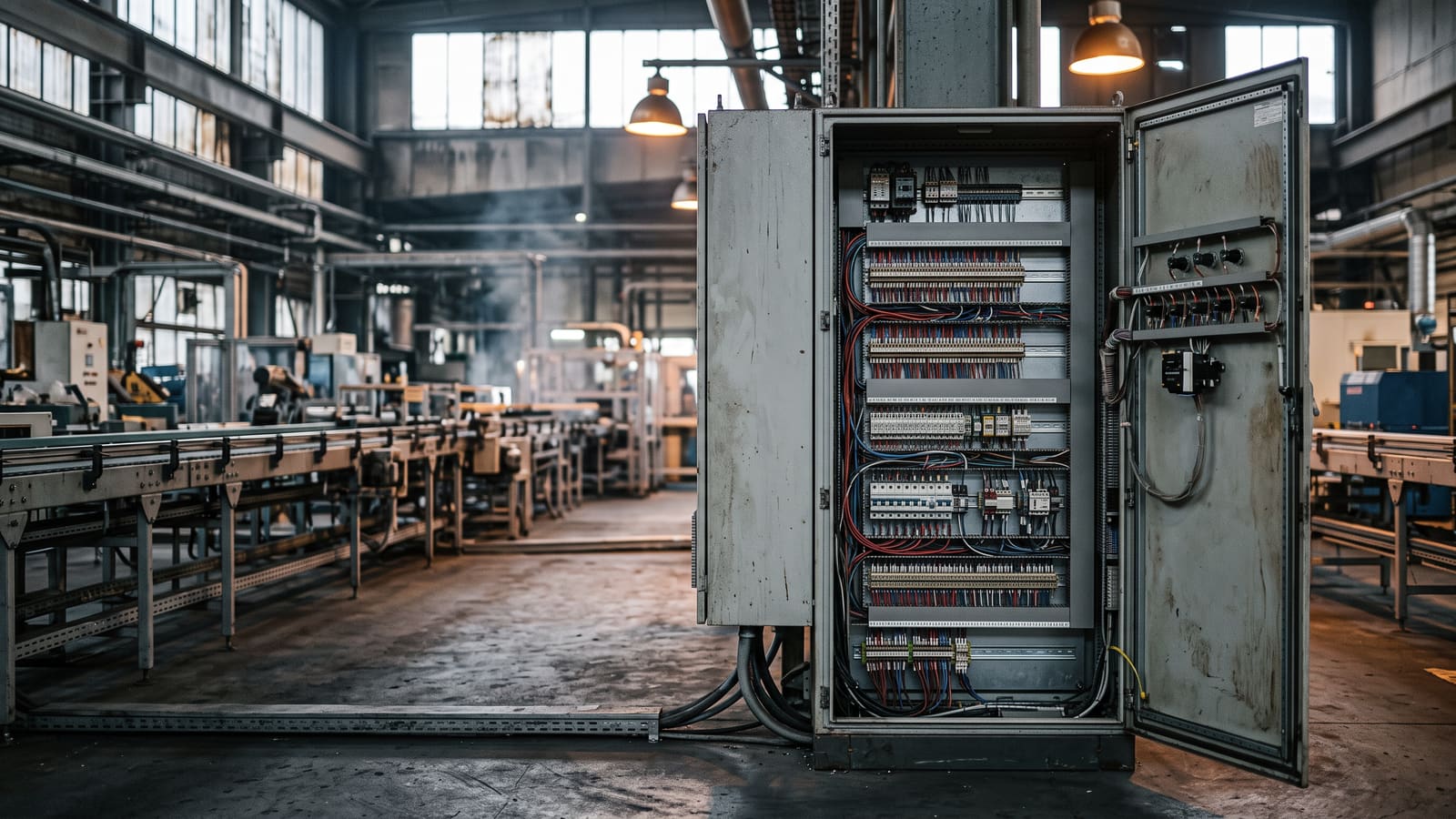
Handling and mounting of switchboards and enclosures, design and installation of cable routes, cable pulls, and terminations at both the panel and the field end. Motors, drives, valves and instruments. In practice everything from the head of the line through to packing.
Routes are walked before anything is pulled. Old plant drawings rarely match reality, and a tray installed in the wrong place costs more later than one site visit costs now.
Pre-wiring at your works
Some of our customers want the equipment cabled and terminated before it ships to the end customer. We do that work at your own premises. Time on site gets shorter, and everything finished at your works is time taken off the schedule at the destination.
Why we do it our way
Numbered terminals, ferruled conductors, wires cut to length. That is better than the minimum requires, and it shows in the quote.
The end customer will never notice. Their line does not run any faster because the cabling is neat. It gets noticed eighteen months later when something fails and one of your service engineers opens that panel somewhere in Europe. At that point the difference is four hours against twenty minutes, and the call comes to you.
Where we work
New lines, extensions and modernisations. Our deepest experience is in the sawmill industry and in heat and power plants, but the work is the same on any production line with motors and sensors on it.
HOW A PROJECT RUNS
- 01
INPUT DATA
Layout, device list and destination. That is enough to start pricing. On a process we know, a figure usually comes back in a day or two.
- 02
SCHEDULE
The installation period and the commissioning window are agreed before work starts. Resourcing is locked down at the same time, because that is where overruns are made.
- 03
INSTALL
Routes walked before anything is pulled, labelled before anything is live. The site is cleared daily. You know where the job stands without having to ask.
- 04
COMMISSION
Loop checks, dry runs and running with material alongside your automation engineer. Commissioning inspection and handover documentation in the agreed form.
The questions that usually come first.
What do you need to price it?
A layout or equipment arrangement, a device list, and where the line is being delivered. That gets us started. If something is missing we price what we have and tell you what the figure rests on.
How quickly do we get a price?
On a process we know, usually in a day or two. A new plant type takes longer, because we will not give a price we cannot hold.
Do you install exactly what is specified?
Yes. If a cable type or a device is specified, that is what goes in, not an equivalent. If a specified part cannot be sourced within the schedule, we propose an alternative and wait for your approval before anything is changed.
Do you travel to site?
We do. The site is wherever the end customer is, and that is part of the job. Most of our projects are somewhere other than our home town.
How are variations handled?
You hear the effect on price and schedule when the issue comes up, not on the final invoice. We agree in advance how changes are handled, so there is nothing to argue about afterwards.
Closely related