Modernisation, extensions and service.
Usually the same crew that installed the line.
Why the same crew matters
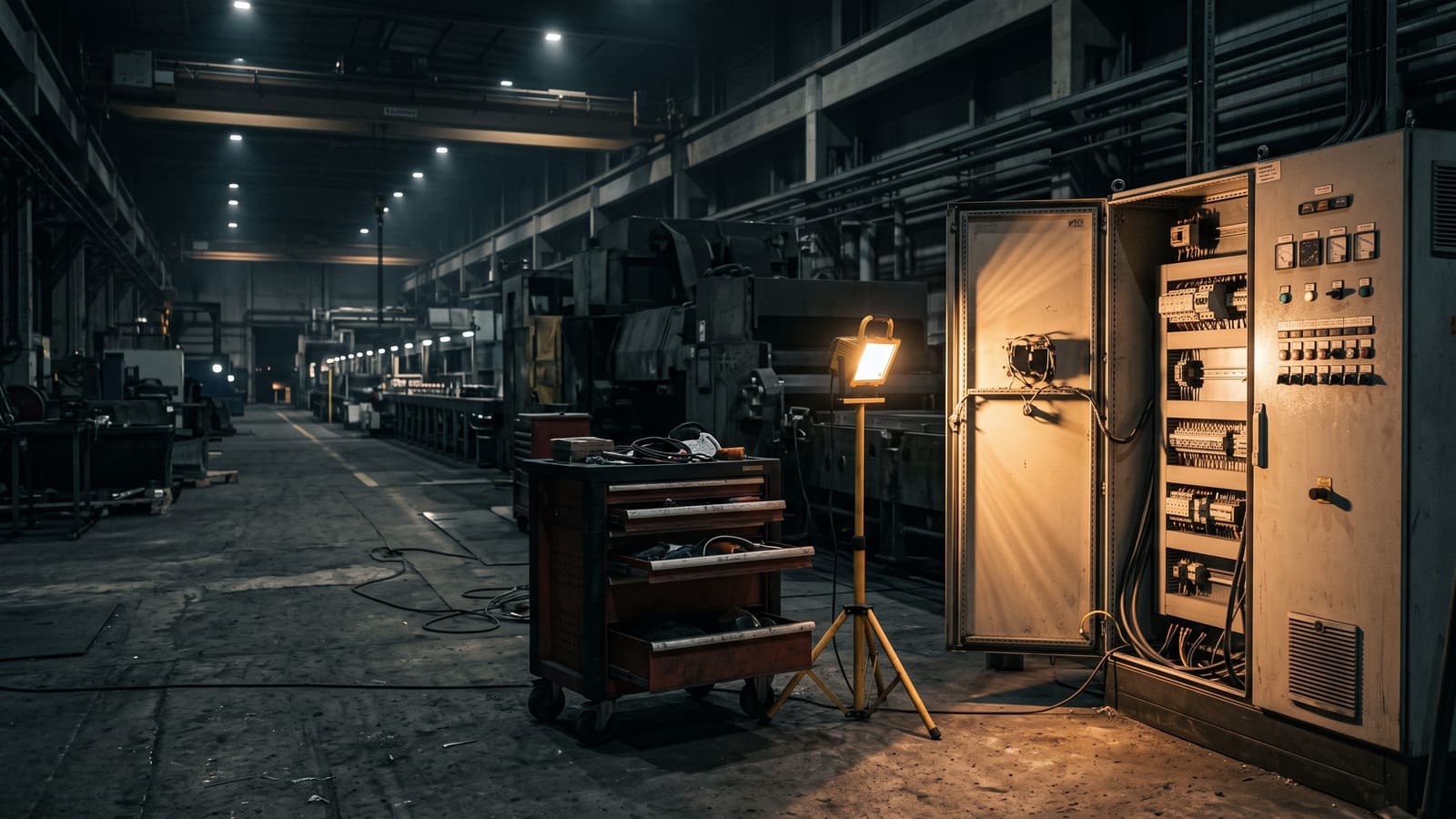
The people who built the panel know what is behind the door. On a breakdown that is the difference between a four-hour fault-find and a twenty-minute one. We keep crews on their own lines wherever we can.
What we do
Line extensions, control system modernisation, replacement of obsolete components, and electrical maintenance visits. Modernisations are usually timed to a shutdown, because there is rarely another window.
We also work on lines installed by others, after a survey. We document what is there first so the next visit is quicker.
Reaching us
Calls get answered, including in the evening. During a project and afterwards you reach the same person you already know. Response times are agreed case by case, depending on what the line is and where it sits.
HOW A PROJECT RUNS
- 01
INPUT DATA
Layout, device list and destination. That is enough to start pricing. On a process we know, a figure usually comes back in a day or two.
- 02
SCHEDULE
The installation period and the commissioning window are agreed before work starts. Resourcing is locked down at the same time, because that is where overruns are made.
- 03
INSTALL
Routes walked before anything is pulled, labelled before anything is live. The site is cleared daily. You know where the job stands without having to ask.
- 04
COMMISSION
Loop checks, dry runs and running with material alongside your automation engineer. Commissioning inspection and handover documentation in the agreed form.
The questions that usually come first.
Do you service lines installed by others?
Yes, after a survey. We document what is there first.
Can a modernisation be done during a shutdown?
That is usually exactly when it is done. The work is planned so the line loses as little time as possible.
Do you offer maintenance contracts?
Yes, case by case. The interval depends on how many shifts are run and what kind of line it is.
Closely related